Sludge formation in phosphating occurs due to the precipitation of insoluble metal phosphates and other by-products. Key causes include:
- Excess iron dissolution: From steel surfaces, reacting with phosphate to form iron phosphate sludge.
- Calcium/magnesium impurities: In water or additives, forming insoluble salts.
- Overaging of bath: Depletion of free acid and acceleration of sludge due to reaction product accumulation.
- High temperature: Accelerates reaction kinetics and sludge generation.
- Poor agitation or filtration: Leads to localized supersaturation and precipitation.
- Contamination: Oils, dirt, or carryover from previous stages increase sludge load.
Sludge mainly consists of iron phosphate, unreacted zinc phosphate crystals, and other metal salts. Regular filtration, sludge removal systems, and bath maintenance minimize sludge issues.

Remedies for sludge formation in phosphating:
- Bath Filtration: Install continuous or periodic filtration systems to remove precipitated sludge.
- Sludge Trap/Pit Design: Use well-designed sludge pits or cone-bottom tanks to facilitate easy sludge settling and removal.
- Pre-cleaning Efficiency: Ensure effective degreasing and cleaning to minimize oil/dirt carryover, which contributes to sludge.
- Water Quality Control: Use demineralized or softened water to avoid calcium/magnesium salt precipitation.
- Temperature Control: Maintain optimum bath temperature to reduce excessive reaction rates and precipitation.
- Regular Desludging: Implement scheduled manual or automatic sludge removal (e.g., daily or weekly).
- Bath Replenishment: Maintain correct free acid and total acid ratios to keep the bath active and balanced.
- Use of Sludge-Reducing Additives: Add stabilizers or complexing agents that reduce unwanted precipitation.
- Agitation: Proper solution agitation (mechanical or air) prevents localized supersaturation and encourages uniform deposition.
- Line Layout Optimization: Minimize drag-in and drag-out across stages to avoid contamination.
Sludge Disposal System Designs in Phosphating Plants:
| System Type | Design Features | Function | Remarks |
|---|---|---|---|
| Sludge Pit (Settling Tank) | Cone-shaped or sloped bottom tank | Allows sludge to settle by gravity | Manual or pump-assisted removal |
| Sludge Collection Trays | Removable trays under phosphating tanks | Collect heavy sludge during processing | Simple for small-scale units |
| Continuous Sludge Filtration Unit | Inline filter press or cartridge/bag filters | Filters out sludge from circulating bath | Reduces downtime and labor |
| Hydrocyclone Separator | Tangential inlet creates vortex | Separates solids from liquids using centrifugal force | Suitable for high-flow systems |
| Decanter Centrifuge | High-speed rotating drum | Separates sludge from bath effluent | Efficient for large-scale operations |
| Sludge Dewatering System | Belt filter press / screw press | Compresses sludge to reduce water content | Facilitates dry disposal |
| Automated Sludge Scraper System | Mechanized bottom scraper inside tank | Moves sludge to a corner for pump-out | Used in high-volume plants |
| Zero Liquid Discharge (ZLD) System | Includes evaporator + crystallizer | Recycles water and recovers salts | High capital cost but eco-friendly |
| Neutralization + Solid Separation Unit | Neutralization tank + clarifier | Prepares sludge for environmental compliance | Required for hazardous waste norms |
Best Practice: Combine sludge settling pit, inline filtration, and periodic mechanical desludging for continuous and effective sludge management. Proper waste classification and authorized disposal (as per local PCB norms) is essential.
Sludge Pit
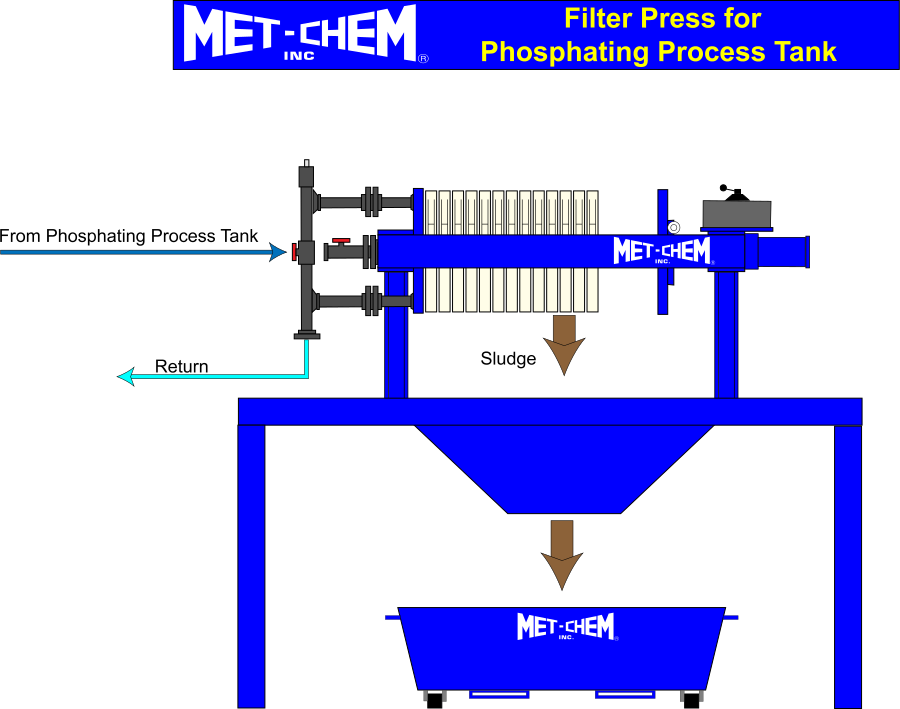
Contact: https://metchem.com/phosphatizing-wastewater-treatment-system/
Sludge collection trays

Contact: https://dewaco.fi/sludge-collection/
Continuous Sludge Removal System

Hydrocyclone Separator